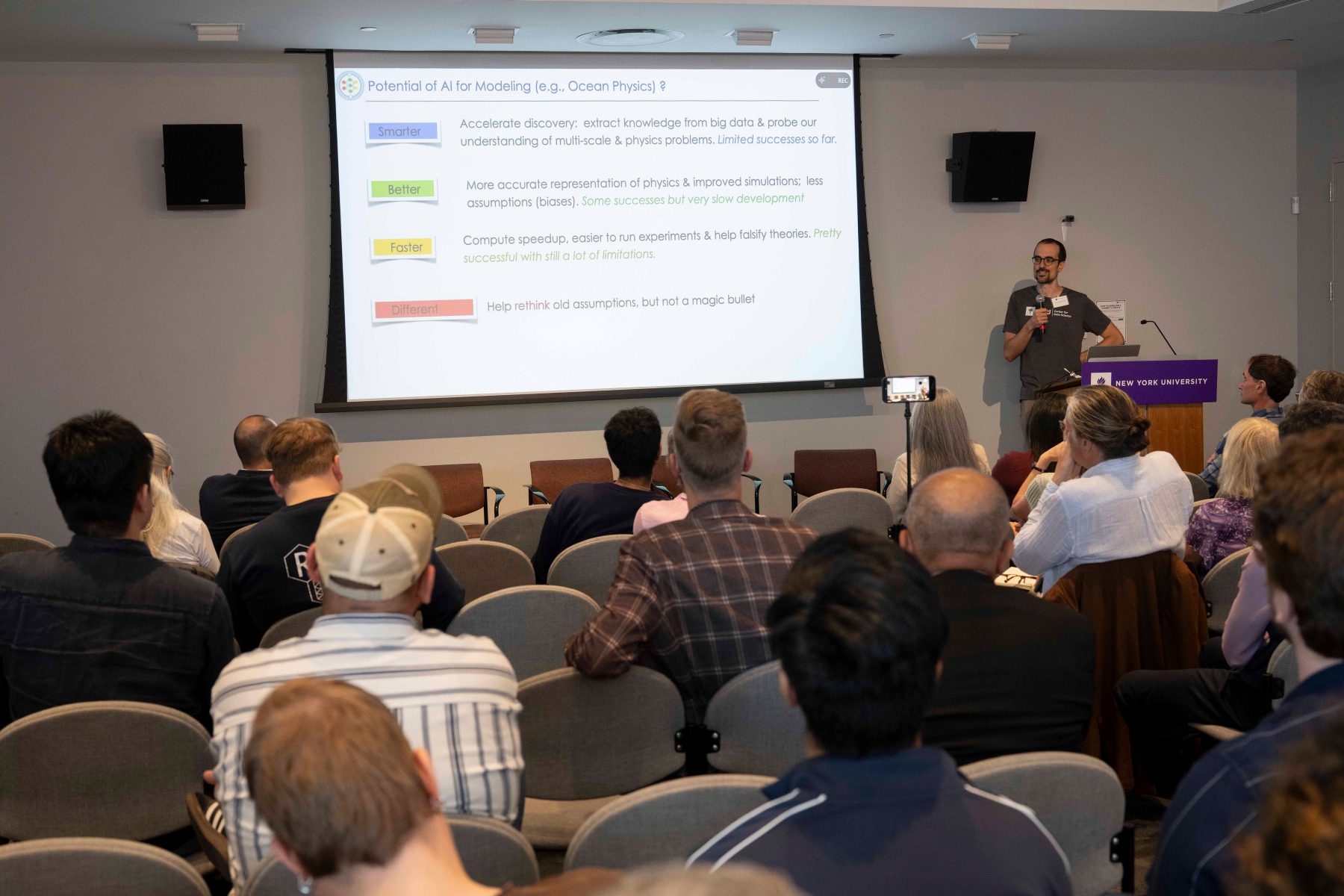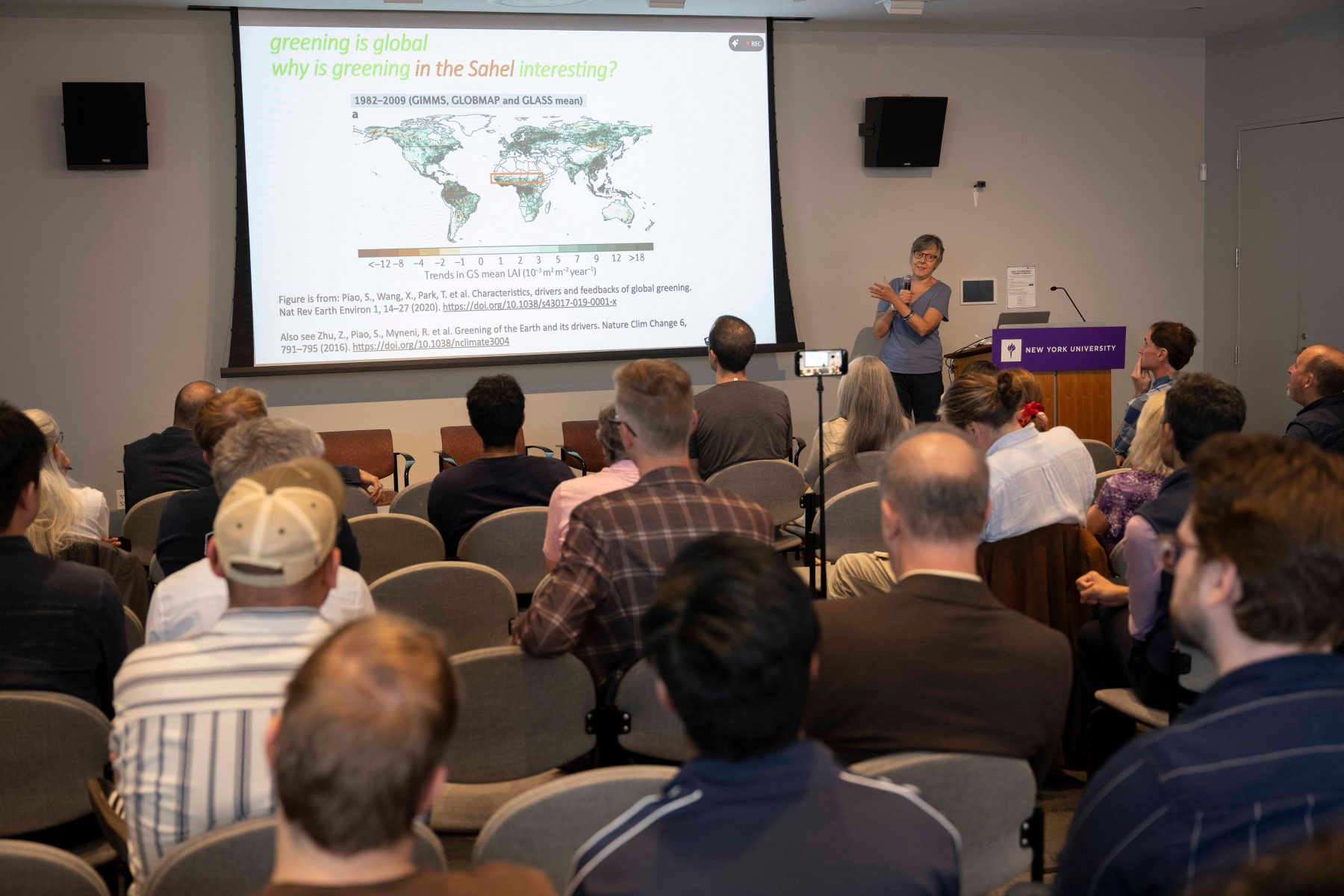

From simulating ocean currents with Artificial Intelligence (AI) to explaining why parts of Africa have grown greener, data-driven research is changing how scientists understand a warming planet. At NYU, that work now has a dedicated home.
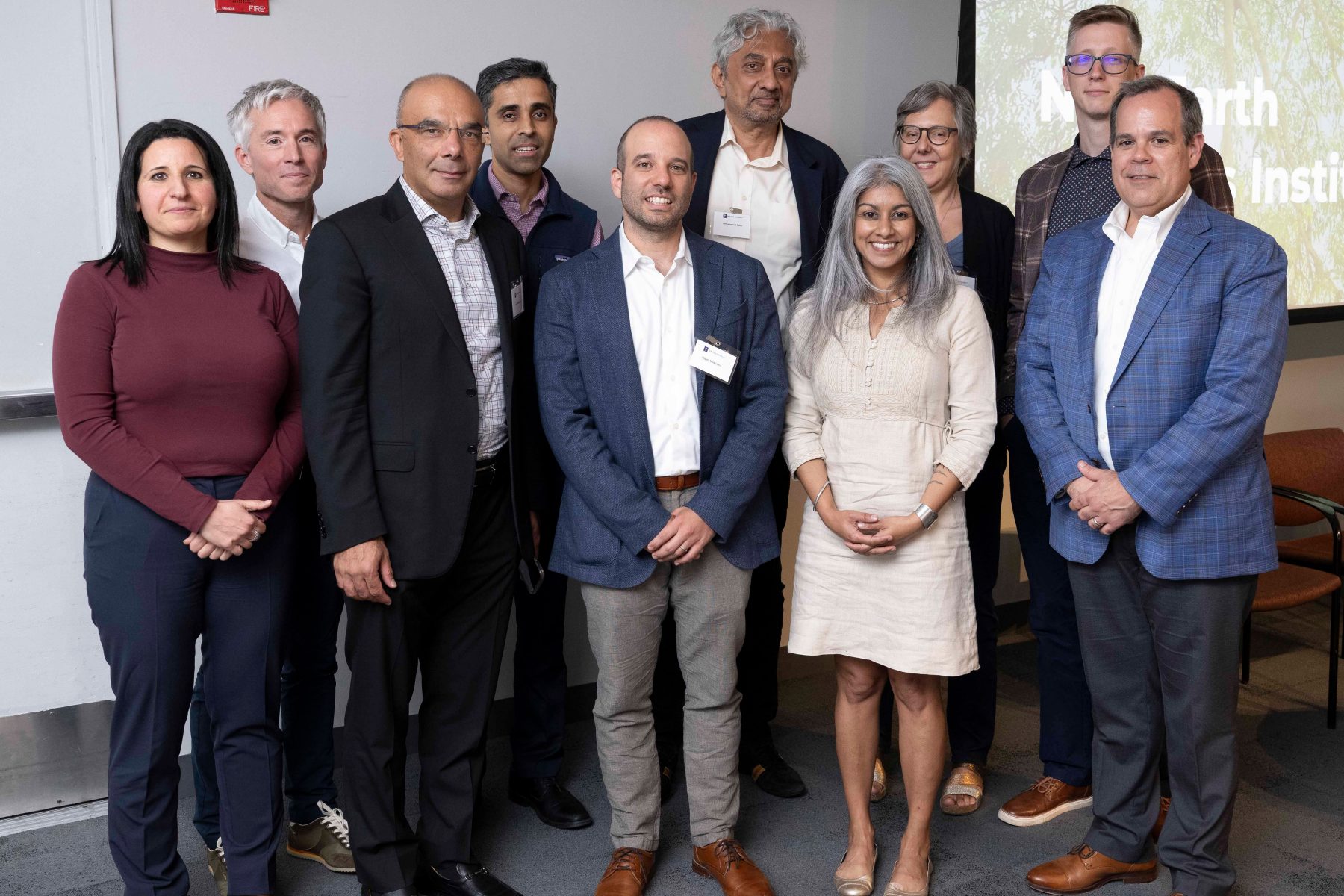
NYU's Earth Systems Institute (ESI) made its public debut on September 21 as part of Climate Week NYC, gathering faculty, students, and partners from industry and philanthropy for an afternoon of research talks and conversation.
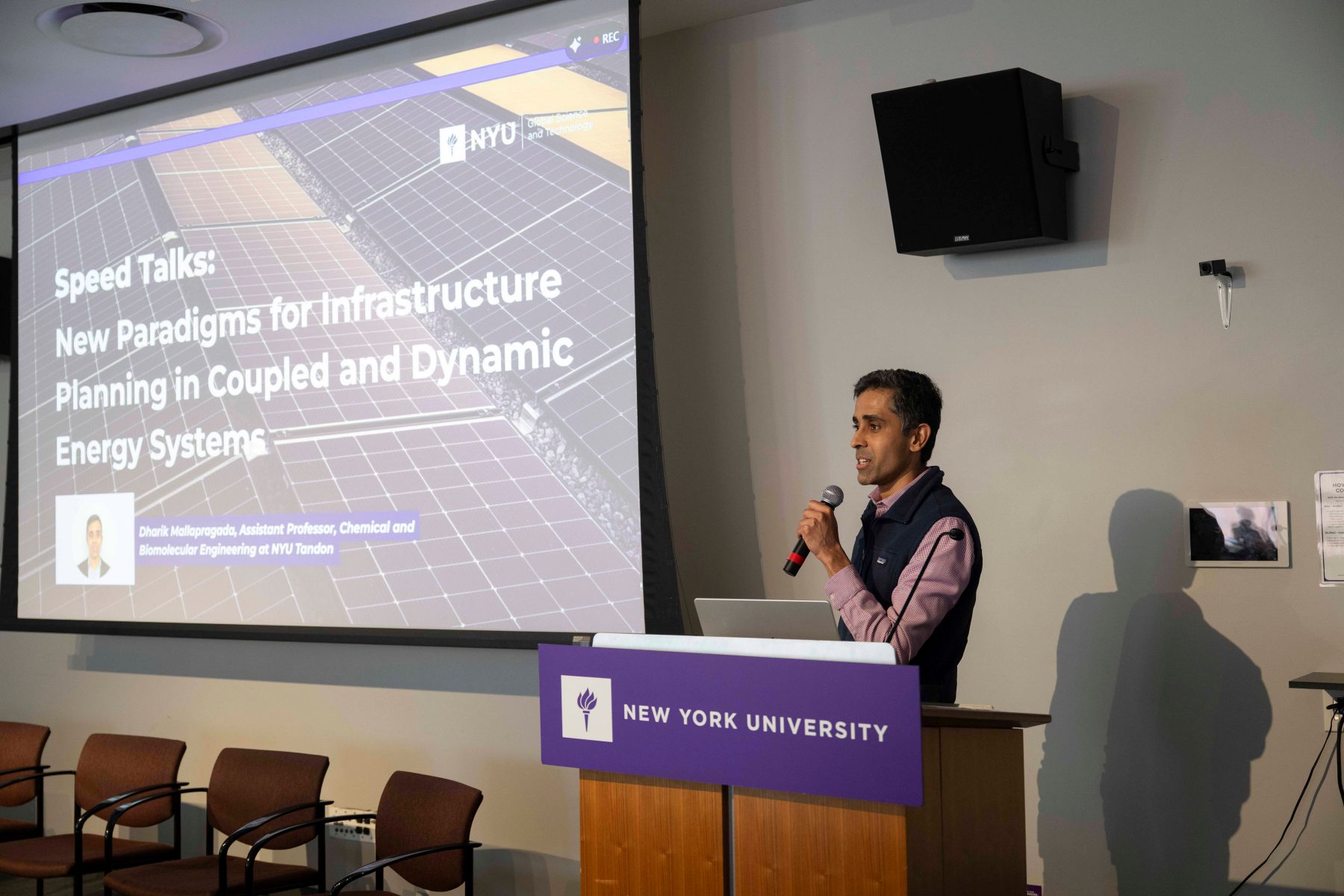
With Sonali McDermid, an associate professor in NYU's Department of Environmental Studies and ESI co-deputy director, as emcee, the program moved from an overview of the Institute to three faculty speed talks, an open Q&A, and a panel of experts.
The Earth Systems Institute is one of the new research institutes launched by NYU's Office of Global Science and Technology (GST); it brings data-driven Earth system science to the problem of environmental change. Its researchers use AI and computational tools to improve projections of the Earth system and to strengthen the resilience of food, water, and energy systems. The Institute draws on mathematical and computational research at the Courant Institute School of Mathematics, Computing, and Data Science, engineering at NYU Tandon School of Engineering, and policy-connected food and environmental science at NYU Arts & Science. Together, these groups study how a changing climate cascades across the oceans, atmosphere, and landscapes, to inform economic, conservation, and policy decisions.
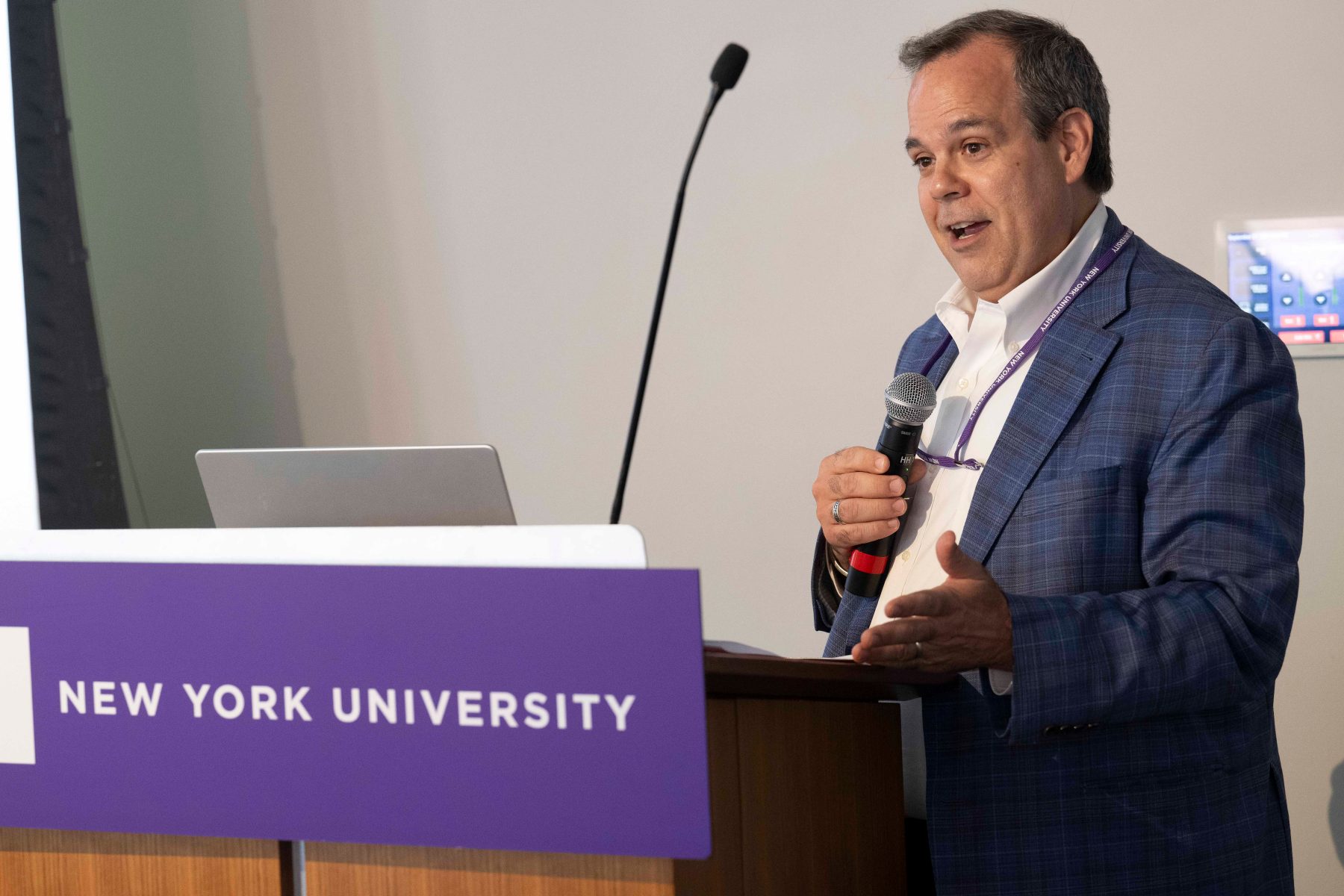
NYU Global Science and Technology Vice President for Strategic Partnerships Eric Vieira described ESI’s role as connecting expertise across NYU's schools and engaging partners in industry, government, philanthropy, nonprofits, and other universities. Vieira emphasized that "Today is more than the launch of another institute, it is an invitation."
That invitation comes with a clear mission. As Laure Zanna, director of NYU Earth Systems Institute and Keller Professor of Applied Mathematics at the NYU Courant Institute School of Mathematics, Computing, and Data Science, explained, the goal is to build data-driven models that help us understand and predict climate change, put those models in the hands of decision-makers, and use them to build solutions for planetary resilience.